Cetyl Phosphate mono Potassium Salt
CAS19035-79-1
Potassium cetyl phosphate (CAS 19035-79-1) is the monopotassium salt of hexadecyl hydrogen phosphate, an anionic oil-in-water emulsifier whose alkyl phosphate structure resembles the phospholipids of the skin. It is used in creams, lotions and sun care products, including PEG-free formulations. King-Pharm supplies potassium cetyl phosphate for research and production with a batch-specific certificate of analysis.
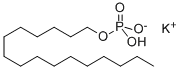
- CAS No.
- 19035-79-1
- Formula
- C16H34O4PK
- Mol. weight
- 360.51 g/mol
- Appearance
- White to Off-white Powder
Product Description
Potassium cetyl phosphate is the potassium salt of the monoester of phosphoric acid with cetyl (hexadecyl) alcohol, molecular formula C16H34KO4P. It combines a C16 saturated alkyl chain with an ionized phosphate head group and is listed in cosmetic ingredient databases with emulsifying and surfactant functions.
In an oil-in-water emulsion the cetyl chain anchors in the oil phase while the anionic phosphate group faces the water phase, lowering interfacial tension and giving the droplets a negative surface charge. Together with fatty-alcohol co-emulsifiers it can build a liquid crystalline structure at the oil-water interface, which supports long-term emulsion stability.
Compared with ethoxylated (PEG-based) emulsifiers, it allows PEG-free formulations, and supplier literature reports good tolerance on skin and stability over a wide pH range. In sun care formulations it is described as contributing to SPF performance and water resistance.
When sourcing, check the assay of the monoester and the proportion of diester and free phosphoric acid, the potassium content, moisture, and the identity confirmed on the certificate of analysis. Note that some labels also cite CAS 84861-79-0 for potassium cetyl phosphate, so confirm which CAS and grade your formulation requires.
Chemical Specifications
Identifiers
| CAS number | 19035-79-1 |
|---|---|
| Product name | Cetyl Phosphate mono Potassium Salt |
| IUPAC name | potassium hexadecyl hydrogen phosphate |
| Synonyms | Kaliumhexadecylhydrogenphosphat; Phosphoric acid hydrogen hexadecyl potassium salt; 1-Hexadecanol,1-(dihydrogenphosphate),potassiumsalt(1:1); Cetyl potassium phosphate; amfizolK; 1-Hexadecanol,dihydrogenphosphate,monopotassiumsalt; AMPHISOLK |
| Molecular formula | C16H34O4PK |
| Molecular weight | 360.51 g/mol |
| EC number | 242-768-1 |
| PubChem CID | 23672321 |
| InChIKey | RMGVATURDVPNOZ-UHFFFAOYSA-M |
| SMILES | CCCCCCCCCCCCCCCCOP(=O)(O)[O-].[K+] |
Physical and chemical properties
| Appearance | White to Off-white Powder |
|---|
Applications
Potassium cetyl phosphate is mainly used as an anionic oil-in-water emulsifier in personal care formulations.
O/W creams and lotions
Acts as the primary anionic emulsifier for oil-in-water creams and lotions.
Sun care formulations
Stabilizes sunscreen emulsions and is reported to contribute to SPF performance and water resistance.
PEG-free formulations
Provides a non-ethoxylated emulsifier option for PEG-free skin care products.
Cleansing products
Used as a co-surfactant in shower gels, liquid soaps and shampoos.
Quality Documentation
The following documents can be provided for Cetyl Phosphate mono Potassium Salt to support technical evaluation and purchasing. Documents are issued for the specific grade and batch supplied.
-
Certificate of Analysis (COA) Batch-specific test results against the specification.
-
Product specification The release specification with test items, limits and methods.
Packaging, Storage & Transport
| Available pack sizes | 5kg, 1kg, 500g, 100g, 50g, 10g |
|---|
Read the current safety data sheet before handling. Packaging can be adapted to the order quantity and destination.
Frequently Asked Questions
How does potassium cetyl phosphate compare with PEG-based emulsifiers?
It is non-ethoxylated, so it allows PEG-free formulations, and its alkyl phosphate structure resembles skin phospholipids; supplier literature also reports good skin tolerance and stability over a wide pH range.
How is it typically incorporated into an emulsion?
Supplier guidelines recommend adding it to the oil or water phase at elevated temperature and combining it with fatty-alcohol co-emulsifiers for best long-term stability.
How should potassium cetyl phosphate be stored?
Keep it in a tightly closed container in a cool, dry place, protected from moisture.
What is the CAS number of Cetyl Phosphate mono Potassium Salt?
The CAS Registry Number of Cetyl Phosphate mono Potassium Salt is 19035-79-1. Cetyl Phosphate mono Potassium Salt is also known as Kaliumhexadecylhydrogenphosphat; Phosphoric acid hydrogen hexadecyl potassium salt; 1-Hexadecanol,1-(dihydrogenphosphate),potassiumsalt(1:1).
What is the molecular formula and molecular weight of Cetyl Phosphate mono Potassium Salt?
The molecular formula of Cetyl Phosphate mono Potassium Salt is C16H34O4PK, and its molecular weight is 360.51 g/mol.
What is Cetyl Phosphate mono Potassium Salt used for?
Potassium cetyl phosphate is mainly used as an anionic oil-in-water emulsifier in personal care formulations.
Which quality documents are available for Cetyl Phosphate mono Potassium Salt?
The following documents are available for Cetyl Phosphate mono Potassium Salt: Certificate of Analysis (COA); Product specification. Contact ChemSigma to request the documents for a specific batch.
How can I request a quotation for Cetyl Phosphate mono Potassium Salt?
Send an inquiry for Cetyl Phosphate mono Potassium Salt (CAS 19035-79-1) with the required quantity, target specification, destination country and any documentation requirements. ChemSigma will confirm availability, packaging, lead time and price.
Related Products
Request a Quote for Cetyl Phosphate mono Potassium Salt
Tell us the required quantity, target specification, destination country and any documentation requirements. We will confirm availability, packaging, lead time and price.
Need custom synthesis or scale-up? Our group company CKS Technology offers custom synthesis, process development and scale-up.Page last reviewed on by Leo Xiao.