1-(4-Pyridinyl)-2-Propanone
CAS6304-16-1
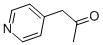
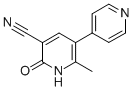
1-(4-Pyridinyl)-2-propanone (4-pyridylacetone, CAS 6304-16-1) is a pyridine ketone building block in which an acetonyl group is attached to the 4-position of the pyridine ring. Its reactive methylene between the ring and the carbonyl makes it a key intermediate for the cardiotonic drug milrinone and related pyridyl heterocycles. King-Pharm supplies 1-(4-pyridinyl)-2-propanone for research and production with a batch-specific certificate of analysis.
- CAS No.
- 6304-16-1
- Formula
- C8H9NO
- Mol. weight
- 135.16 g/mol
- Appearance
- Colorless to Light-yellow Liquid
Product Description
1-(4-Pyridinyl)-2-propanone (C8H9NO, MW 135.16) is a small pyridine derivative carrying a methyl ketone side chain at the 4-position. It is reported as a light yellow to brown liquid or oil at room temperature, with a melting point of about 13 °C and a boiling point of 143 °C at 20 mmHg.
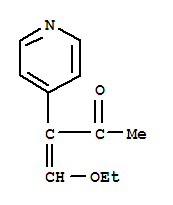
The CH2 group flanked by the electron-poor 4-pyridyl ring and the carbonyl is readily deprotonated or condensed with electrophiles. In milrinone routes it is typically converted into an enaminone or alkylidene intermediate and then cyclized with a cyanoacetamide-type partner to build the 2-pyridone ring of the bipyridine scaffold.
Compared with building the pyridyl acetone fragment in situ, using the isolated ketone shortens the route and gives a defined starting point for impurity control. The 4-substitution pattern is essential for milrinone; the 2- and 3-pyridyl isomers lead to different products and are not interchangeable.
For procurement, confirm assay, positional isomer content, water content and colour against the specification. The pyridine nitrogen is weakly basic (pKa about 4.9, predicted), so the material may form salts with acids; check whether the free base or a salt form is required.
Chemical Specifications
Identifiers
| CAS number | 6304-16-1 |
|---|---|
| Product name | 1-(4-Pyridinyl)-2-Propanone |
| IUPAC name | 1-pyridin-4-ylpropan-2-one |
| Synonyms | 2-Propanone, 1-(4-pyridinyl)-; 2-Propanone, (4-pyridyl)- (6CI); 2-Propanone, 1-(4-pyridyl)- (8CI); 1-(4-Pyridyl)-2-propanone; 1-(4-Pyridyl)-acetone; 1-(Pyridin-4-yl)acetone; 1-(Pyridin-4-yl)propan-2-one; 4-(2-Oxopropyl)pyridine; 4-Acetonylpyridine; 4-Pyridinylacetone; 4-Pyridylacetone; Methyl 4-pyridylmethyl ketone; NSC 42613 |
| Molecular formula | C8H9NO |
| Molecular weight | 135.16 g/mol |
| EC number | 228-605-7 |
| MDL number | MFCD00129043 |
| PubChem CID | 80552 |
| InChIKey | ILRVKOYYFFNXDB-UHFFFAOYSA-N |
| SMILES | CC(=O)CC1=CC=NC=C1 |
Physical and chemical properties
| Appearance | Colorless to Light-yellow Liquid |
|---|
Applications
1-(4-Pyridinyl)-2-propanone is mainly used as a pyridyl building block in pharmaceutical synthesis:
Milrinone intermediate
Serves as the pyridyl ketone starting material for constructing the bipyridine pyridone core of milrinone.
Heterocycle building block
Its active methylene and ketone allow condensation and cyclization to pyridyl-substituted pyridones, pyrazoles and pyrimidines.
Analogue and impurity research
Used to prepare milrinone-related analogues and process-related reference compounds for analytical method work.
Process development
Provides a defined, isolable starting material for route scouting and scale-up of pyridyl ketone chemistry.
Quality Documentation
The following documents can be provided for 1-(4-Pyridinyl)-2-Propanone to support technical evaluation and purchasing. Documents are issued for the specific grade and batch supplied.
-
Certificate of Analysis (COA) Batch-specific test results against the specification.
-
Product specification The release specification with test items, limits and methods.
Packaging, Storage & Transport
| Available pack sizes | 5kg, 1kg, 500g, 100g, 50g, 10g |
|---|
Read the current safety data sheet before handling. Packaging can be adapted to the order quantity and destination.
Frequently Asked Questions
Can 2- or 3-pyridylacetone replace 1-(4-pyridinyl)-2-propanone?
No. The position of the ring nitrogen determines the substitution pattern of the product; milrinone specifically requires the 4-pyridyl isomer, so positional isomers should be controlled as impurities.
How is it used in milrinone synthesis?
The methylene is usually condensed to an enaminone or alkylidene intermediate, which is then cyclized with a cyanoacetamide-type reagent to form the pyridone ring.
How should 1-(4-pyridinyl)-2-propanone be stored?
Keep tightly closed under an inert atmosphere at room temperature, protected from moisture and light. With a melting point near 13 °C it may solidify when cold; warm gently and mix before sampling.
What is the CAS number of 1-(4-Pyridinyl)-2-Propanone?
The CAS Registry Number of 1-(4-Pyridinyl)-2-Propanone is 6304-16-1. 1-(4-Pyridinyl)-2-Propanone is also known as 2-Propanone, 1-(4-pyridinyl)-; 2-Propanone, (4-pyridyl)- (6CI); 2-Propanone, 1-(4-pyridyl)- (8CI).
What is the molecular formula and molecular weight of 1-(4-Pyridinyl)-2-Propanone?
The molecular formula of 1-(4-Pyridinyl)-2-Propanone is C8H9NO, and its molecular weight is 135.16 g/mol.
What is 1-(4-Pyridinyl)-2-Propanone used for?
1-(4-Pyridinyl)-2-propanone is mainly used as a pyridyl building block in pharmaceutical synthesis:
Which quality documents are available for 1-(4-Pyridinyl)-2-Propanone?
The following documents are available for 1-(4-Pyridinyl)-2-Propanone: Certificate of Analysis (COA); Product specification. Contact ChemSigma to request the documents for a specific batch.
How can I request a quotation for 1-(4-Pyridinyl)-2-Propanone?
Send an inquiry for 1-(4-Pyridinyl)-2-Propanone (CAS 6304-16-1) with the required quantity, target specification, destination country and any documentation requirements. ChemSigma will confirm availability, packaging, lead time and price.
Related Products
Request a Quote for 1-(4-Pyridinyl)-2-Propanone
Tell us the required quantity, target specification, destination country and any documentation requirements. We will confirm availability, packaging, lead time and price.
Need custom synthesis or scale-up? Our group company CKS Technology offers custom synthesis, process development and scale-up.Page last reviewed on by Leo Xiao.